


 Oct 24, 2025
 3 min read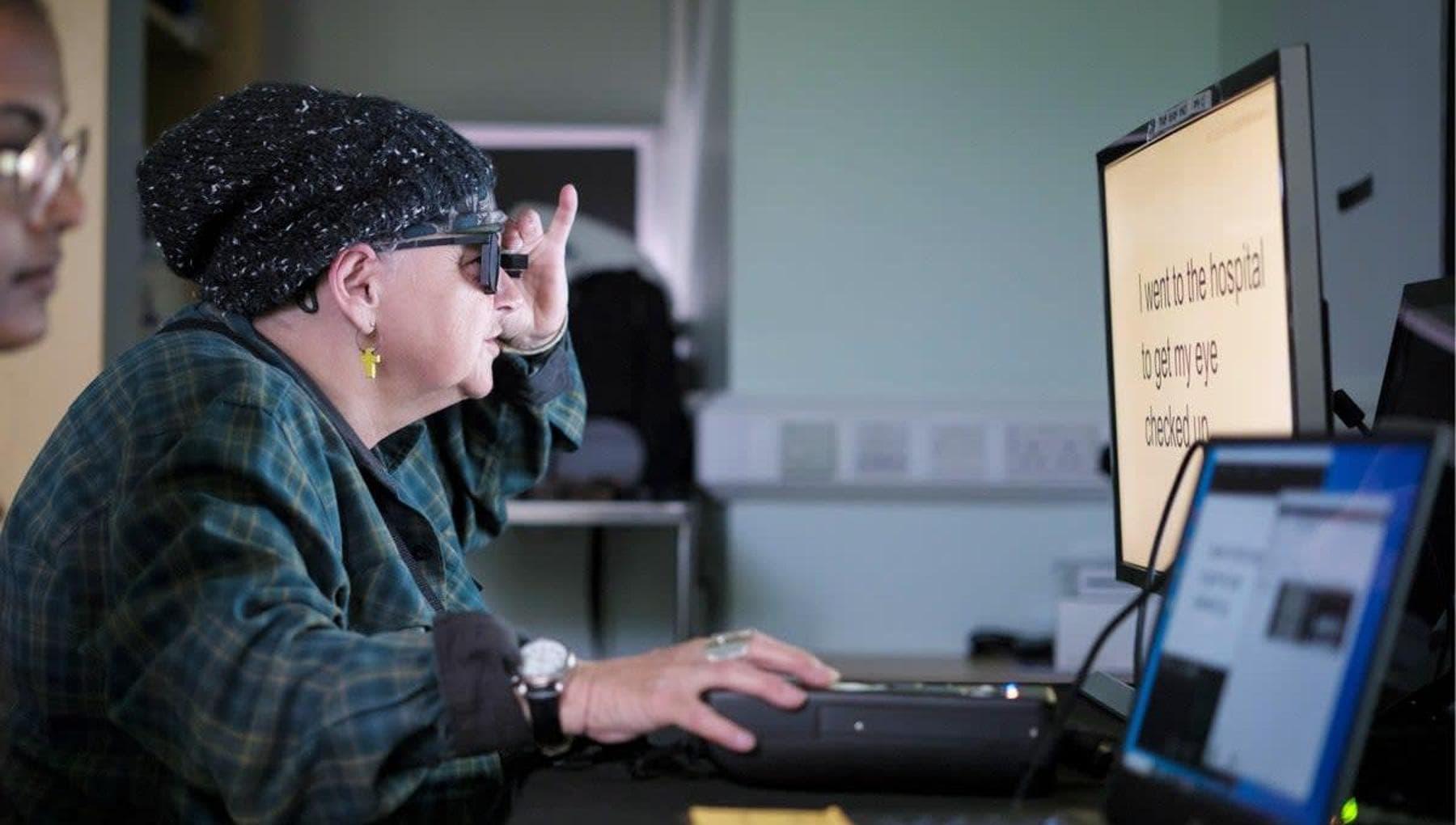
A trial of 38 patients published in the New Journal of Medicine
Being able to read a text again after years spent in the dark.A group of blind people with mild maculopathy now have the ability to read thanks to an implant that has changed their lives.
Thirty-eight patients with geographic atrophy from five European countries participated in the study, which was published in the New England Journal of Medicine.Of the 32 people who received the implant, 27 were able to read again using central vision.
"The results of international research are amazing," explains L.
Sheila
Sheila Irvine, 70, who is visually impaired, told the BBC it was "fantastic" to be able to read books and do crosswords for the first time in a while."It's beautiful and wonderful. It gives me immense joy," he explained.
Therefore, this technology opens up hope for people suffering from age-related macular degeneration, geographic atrophy, which affects 5 million people worldwide.
A rare form of Maclopathy causes loss of central vision.Those who receive this diagnosis must deal with the conflicting effects of vision loss.The disease, more common in the elderly, causes the cells in the small area of the eye to deteriorate and deteriorate, causing a glare that has a border.Colors and fine details are often lost.
Geographical regression represents a serious problem in global vision and is one of the most common causes of legal blindness in developed countries.Cases may double to 10 million by 2040.
A new procedure being tested in the UK involves inserting a 2mm square photovoltaic microchip about the thickness of a human hair under the retina.Patients then wear glasses with a built-in video camera.The latter sends an infrared beam of video images to an implant behind the eye, which sends them to a tiny pocket-sized processor to amplify and sharpen them.The images are then sent to the patient's brain via the implant and optic nerve, which partially restores vision.Patients spent months learning to interpret the images.
"This is the first implant that has been proven for patients with useful vision. I can use it in everyday life and allow them to read and write. Muquita added that it is "groundbreaking and living technology."
Start reading again
The plant is called Prima and is produced by the California Biotechnology Science Corporation.Twenty-seven patients were able to read using central vision again.After a year, this resulted in an improvement of the eye chart by 25 letters (five lines).Some participants had greater results, including Sheila.Without the implant she can't read at all, but when she read the eye chart at Moorfields Hospital he didn't make a single mistake.When he finished, he raised his fists in the air and applauded.
The patient has to place a pillow under his chin to stabilize the image from the camera, which can only focus on one or two letters at a time.There were times when I set the device to zoom mode, especially to distinguish the letters C and O.
Cell damage in the retina
The woman began to lose her central vision more than 30 years ago, due to the use of lost cells in the retina.He described his vision as having two black discs together.In detail in the last three years, and he was very pleased with his progress, b as doctors at Moorfields."I can read letters, read books, do words with Sudko," he said.When asked if she ever considered taking up studying again, Sula replied: "No way!""I can't believe it. I'm happy," he added.
Sheila does not wear the device when she is there, because wearing it is too much meditation.In addition, the head must be completely readable.However, more things need to be developed to expand the results of the study.
Among other things, the implant has not yet been approved by regulatory bodies and is not available outside of clinical trials.However, Mahi Mukit said he hoped it would be offered to NHS patients in Britain within a few years.So it is possible that the technology could be used in the future to help people with eye diseases.
The results are "encouraging".
But researchers are enthusiastic.According to Dr Peter Bloomfield, director of research at the Macular Society, the results are "encouraging".
Clinical trials are not expected to help people with conditions where the optic nerve, which sends signals from the retina to the brain, does not work properly.