

 Oct 27, 2025
 3 min read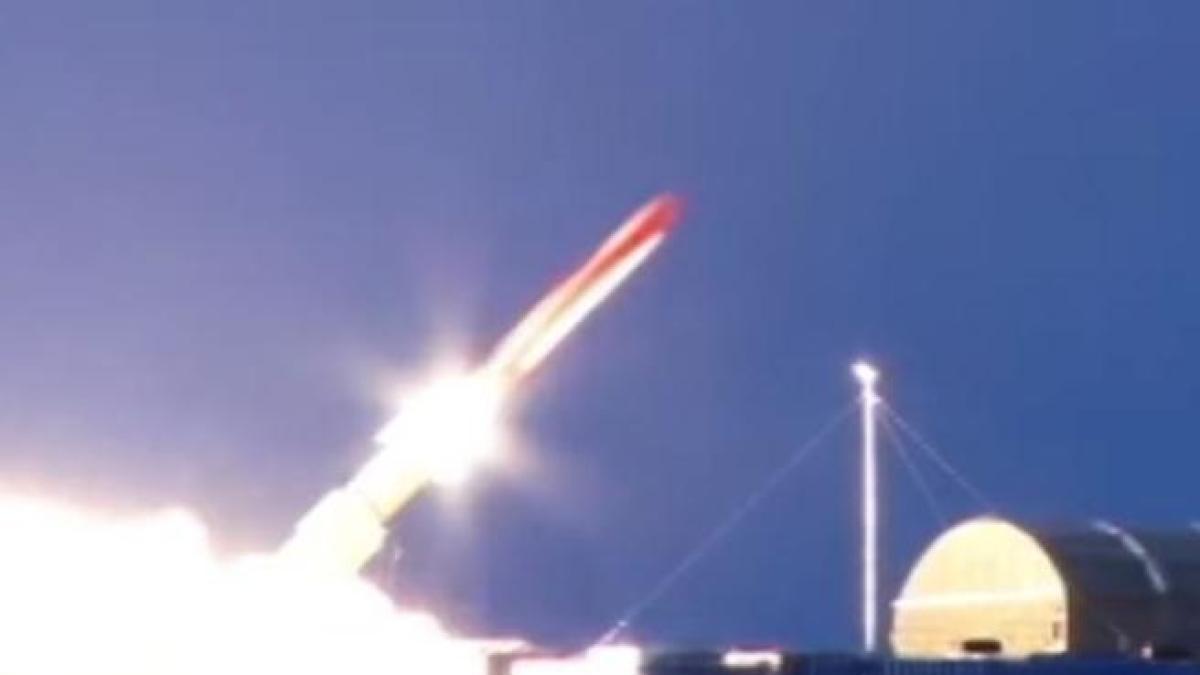
New Russian missile "can reach anywhere without being noticed"
Mass Challenge: Moscow responded to the Tomahawk threat with Burevesnik (before the new agreement with the US
New Russian missile "can reach anywhere without being seen"
The name already says it all.Or, at least, tries to.Burevestnik means "storm bird" or "gasoline" in Russian, a sea bird that heralds the coming of storms and is the main character of Maxim Gorky's famous revolutionary poem.Although the hypothesis of a new face-to-face meeting between Trump and Putin in Budapest has disappeared, the Russian president announces the success of the Burevestnik 9M730 test.
According to the kremlin, the nuclear-the nursed-to the therise-remed of SSC-X-9 skysed - skysing thessing thessing and skysing themes, and the Spin of Sport "and another country in the world that has."
Propulsion and movement
Secondo la stampa russa, al momento del lancio il Burevestnik misura circa 12 metri, per poi ridursi a 9 in volo. La propulsione è affidata a un motore termico nucleare che entra in funzione soltanto dopo il decollo. Svelato nel 2018, insieme al supersiluro Poseidon, al nuovo missile balistico intercontinentale RS-28 Sarmat, alla testata ipersonica planante (Hgv) Avangard e al missile ipersonico Kinzhal, è il «gioiello» dell’arsenale strategico russo. Secondo il generale Valery Gerasimov capo di stato maggiore delle forze armate russe, durante il test effettuato il 21 ottobre, il Burevestnik ha percorso 14 mila chilometri rimanendo in volo per circa 15 ore sempre grazie alla propulsione nucleare.
The test is part of a larger series of strategic exercises carried out last week, during which Putin oversaw nuclear maneuvers on land, sea and air.But not only that.This also comes at a particularly tense moment in Moscow's relations with Washington, which has threatened to supply Kiev with Tomahawk missiles, capable of hitting targets deep in Russian territory.
But when Russia has 5,459 nuclear launchers, we have 5,459 nuclear warheads (they are 87% of the world's nuclear weapons, destructive power), and we must also consider that the new current treaty signed by Russia and the United States in 2010 (arms reduction treaty) will expire in a few months in February 2026.
And as of today, there are no negotiations on a new ratification of the agreement.It should not be forgotten that at the end of 2024, the Russian authorities approved some formal changes to the nuclear doctrine, which allow the use of such weapons in the event of a threat to the "sovereignty and territorial integrity" of Russia and Belarus, including through attacks with "conventional", that is, non-nuclear weapons.
Translated: the rhetorical device of using nuclear weapons as a threat or last resort is no longer taboo, on the contrary.On the other hand, the conversation on this issue does not seem to be among the priorities of the White House, at least for the moment.Both because any negotiations would give Russia more bargaining power in negotiations to end the war in Ukraine, and because Washington wants a broader deal that takes into account China's growing role as a nuclear power.
Teaching and treatment
According to the nuclear threat initiative, Russia has been partially successful on two occasions.Supermissile development has not had a single day of violation and some may have sufficiently reduced the size of the nuclear power plant.In 2019, five people failed and made up those who were missed during the failed test.Finally, experts reported that the second nuclear attack represents an effective option to occupy all resources.
It can reach opposition targets in the United States or Europe, which causes more damage to the flight path than the first cargo plane.In short, a great weapon can fly, too.But not before all.